
How to sell a fire-damaged car
Quick answer
File the claim first: fire is covered under the optional comprehensive part of an auto policy, not liability. If the insurer totals the car and you keep it, your state may require a salvage or nonrepairable title before you sell. A badly burned car is usually sold for scrap metal and any parts that survived, so get quotes from junk car buyers and yards and disclose the fire.
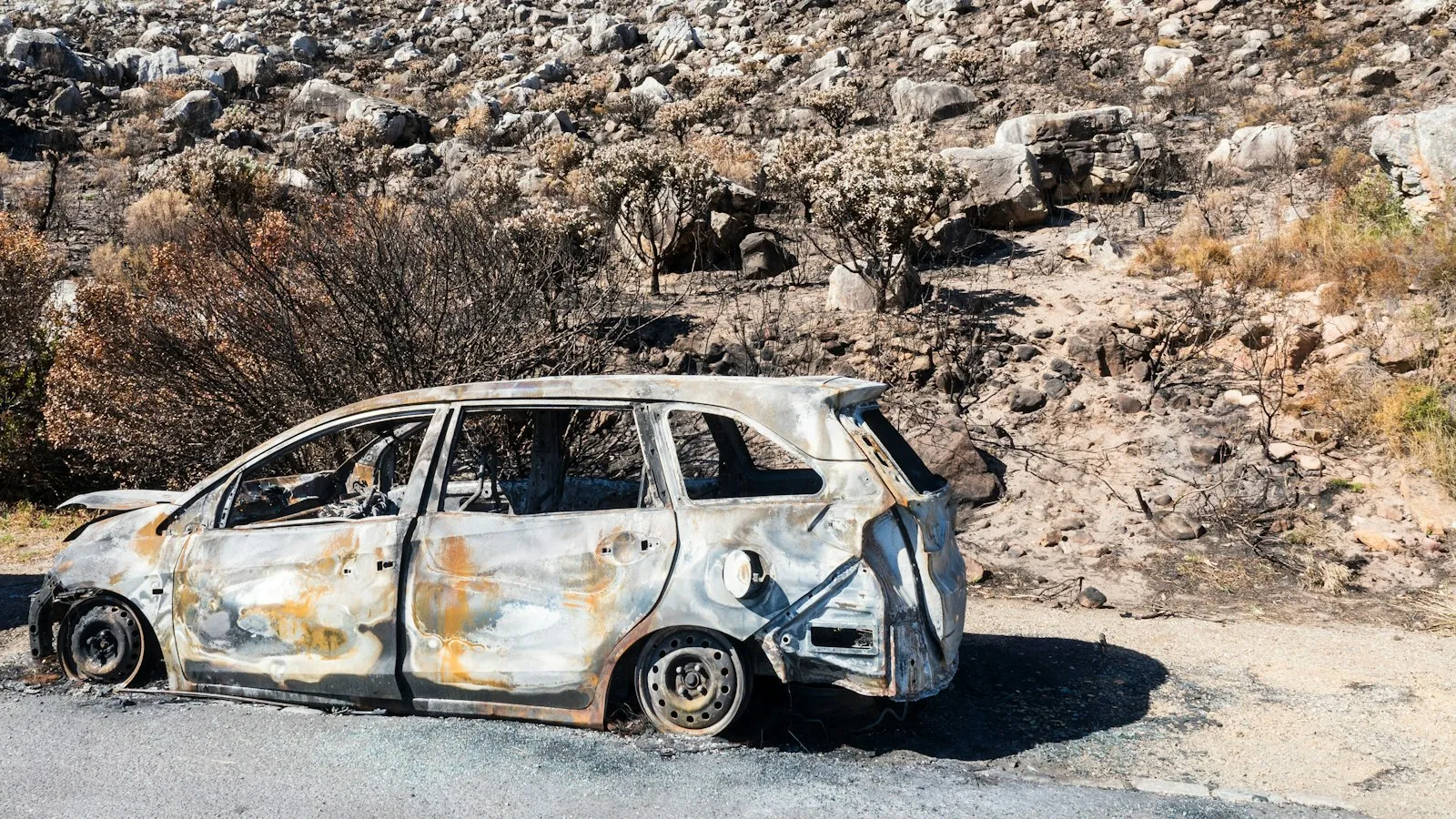
A car that has burned is almost always a total loss. The useful questions are who pays, what the title will say and who will haul it away for a fair price. Deal with the insurance first, keep the car somewhere safe and then sell it as scrap or for parts.
Start with the insurance claim
Fire damage to your own car is covered by comprehensive coverage, the optional part of an auto policy that pays for non-collision losses. Triple-I lists fire alongside theft, vandalism, falling objects and natural disasters. Drivers who finance a car may be required to carry it.1 If you only carry liability coverage, the policy won’t pay for your own car.
If the insurer declares the car a total loss, it pays the car’s market value or the policy limit, less any deductible that applies.2 Gap insurance, if you have it, covers the difference between that value and what you still owe on a loan.2
The insurer will usually want to inspect the car and may ask for a fire department or police report, so don’t sell or scrap it until the adjuster says you can. Once the claim is paid, the insurer takes the car unless you keep it. In Washington, for example, keeping it means the insurer deducts the car’s salvage value from your payout.3
Keep the burned car safe until it’s sold
- Keep it outdoors, away from your house, other cars and anything that can burn.
- Electric and hybrid cars need extra care. The National Transportation Safety Board found that energy left in a damaged high-voltage battery can make it reignite: in all three crash fires it studied, the batteries reignited after firefighters had put the fire out.4 Tell any buyer or tow company it’s an EV or hybrid before they arrive.
- Don’t try to drive it, even if it starts. Wiring, brake lines and fuel lines may be damaged.
- If the car catches fire again, follow the U.S. Fire Administration’s advice for vehicle fires: don’t open the hood or trunk, move everyone at least 100 feet away and call 911.5
What a fire-damaged car is worth
Buyers price burned cars mainly on what’s left:
- How far the fire spread. An engine-bay fire that stayed under the hood may leave the body panels, doors, glass, wheels and interior sellable. A fully burned car is valued for metal weight.
- Weight and scrap prices. Steel is priced by weight, and scrap prices change with the market. See how junkyards price cars.
- Parts that survived. Wheels and tires, rear lights and parts far from the fire may still be resold. The catalytic converter has value even on many burned cars; see catalytic converters and junk cars.
- Title status. A clean or salvage title opens more buyers than a nonrepairable one.
- Whether it can be rolled. Burned tires and seized brakes can make towing harder. Ask each buyer whether towing is included and whether it costs extra.
Paperwork you’ll need
- The title in your name, or a salvage or nonrepairable title if your state requires one for a retained total loss.
- A lien release if there was a loan.
- The insurance settlement letter, if the insurer paid and you kept the car.
- A bill of sale that says the car is sold as is and was damaged by fire.
- Your release of liability or transfer notice, filed after the sale where your state uses one.
If the title burned in the car, request a duplicate before you sell. See how to get a duplicate title.
Steps to sell a fire-damaged car
- Report the fire and file the claim. Get the adjuster’s inspection done.
- Decide whether to keep the car if it’s totaled. Compare the full payout with the payout minus salvage value.
- Get the right title if your state requires a salvage or nonrepairable title.
- Take photos of every side, the engine bay, the interior and the VIN plate if it’s readable.
- Get quotes from several buyers. You can get an offer for your car and compare it with yards in the junkyard directory. Tell them about the fire and, if it’s an EV or hybrid, about the battery.
- Remove anything you want to keep, including plates, if your state requires you to keep them.
- Sign over the title at pickup, get a receipt and file your release of liability.
How state rules differ
States brand a burned car’s title using their own salvage definitions, which turn mainly on how much the damage would cost to repair compared with the car’s value. Two examples:
- Texas. When an insurer pays a claim but the owner keeps the car, the insurer files an Owner Retained Report (VTR-436) that records the damage type, including “Burned”, and states whether the car is a salvage or nonrepairable vehicle. A nonrepairable vehicle is one damaged, wrecked or burned so badly that its only remaining value is as parts or scrap metal. The insurer must file the report within 30 days if it doesn’t take ownership.6 A salvage vehicle has to be rebuilt and inspected before it can be driven again.7 Details: Texas junk car laws.
- New York. The salvage definition includes a vehicle acquired by an insurer whose repairs would cost more than 75% of its pre-damage retail value. The DMV won’t examine or retitle a rebuilt vehicle whose certificate or out-of-state title is marked “parts only”, “non-rebuildable”, “non-repairable”, “scrapped” or “destroyed”, because those vehicles are deemed not roadworthy.8 Details: New York junk car laws.
Other states use different thresholds and brands. Look up yours at junk car laws by state.
Keep the fire records with the title
Insurers look closely at burned cars, and buyers may ask how the fire started. If your car burned on its own or in a crash, keep the fire report and claim records with the title. Honest paperwork makes the sale faster.
For a car the insurer has already written off, see how to sell a totaled car. For a car that also lost its title, see sell a car without a title.
References
-
Insurance Information Institute (Triple-I), “What is covered by collision and comprehensive auto insurance?”, https://www.iii.org/article/what-is-covered-by-collision-and-comprehensive-auto-insurance ↩
-
Insurance Information Institute (Triple-I), “Auto insurance jargon buster” (entries for “Totaled” and “Gap insurance”), https://www.iii.org/article/auto-insurance-jargon-buster ↩ ↩2
-
Washington State Office of the Insurance Commissioner, “What happens after your car gets totaled”, https://insurance.wa.gov/what-happens-after-your-car-gets-totaled ↩
-
National Transportation Safety Board, “Risks to emergency responders from high-voltage, lithium-ion battery fires addressed in safety report” (January 13, 2021), https://www.ntsb.gov/news/press-releases/Pages/NR20210113.aspx ↩
-
U.S. Fire Administration (FEMA), “Vehicle fires”, https://usfa.fema.gov/prevention/vehicle-fires ↩
-
Texas Department of Motor Vehicles, Form VTR-436 “Owner Retained Report” (Rev. 01/25), https://www.txdmv.gov/sites/default/files/form_files/VTR-436.pdf ↩
-
Texas Department of Motor Vehicles, “Salvage brands”, https://www.txdmv.gov/motorists/buying-or-selling-a-vehicle/title-check-look-before-you-buy/salvage-brands ↩
-
New York State DMV, “Salvage vehicles”, https://dmv.ny.gov/salvage/salvage-vehicles ↩
Questions people ask
- Does car insurance cover a car fire?
- Fire is covered under comprehensive coverage, which is optional unless your lender requires it. Liability-only policies don't pay for damage to your own car.
- Is a burned car worth anything?
- Usually yes, mostly for its metal weight and any parts the fire didn't reach. The price depends on how much of the car burned, its weight and local scrap prices, so get a quote from more than one buyer.
- Can I sell a burned car without a title?
- It depends on your state. Most buyers still need proof of ownership, and some states let a junk buyer take a car with other documents. Check your state's rules before you sell.
- Is it safe to keep a burned car in my garage?
- It's safer outdoors and away from buildings. The NTSB found that damaged lithium-ion batteries in electric vehicles can reignite after a fire has been put out, so treat a burned EV or hybrid with extra care.