
How to buy used auto parts from a junkyard
Quick answer
You can buy used auto parts two ways: a full-service yard pulls the part for you, or a self-service (U-pull) yard lets you remove it yourself for less. Match the part to your car by VIN and part number, inspect it before paying, ask about returns and core charges, and buy safety parts such as air bags new from a dealer.
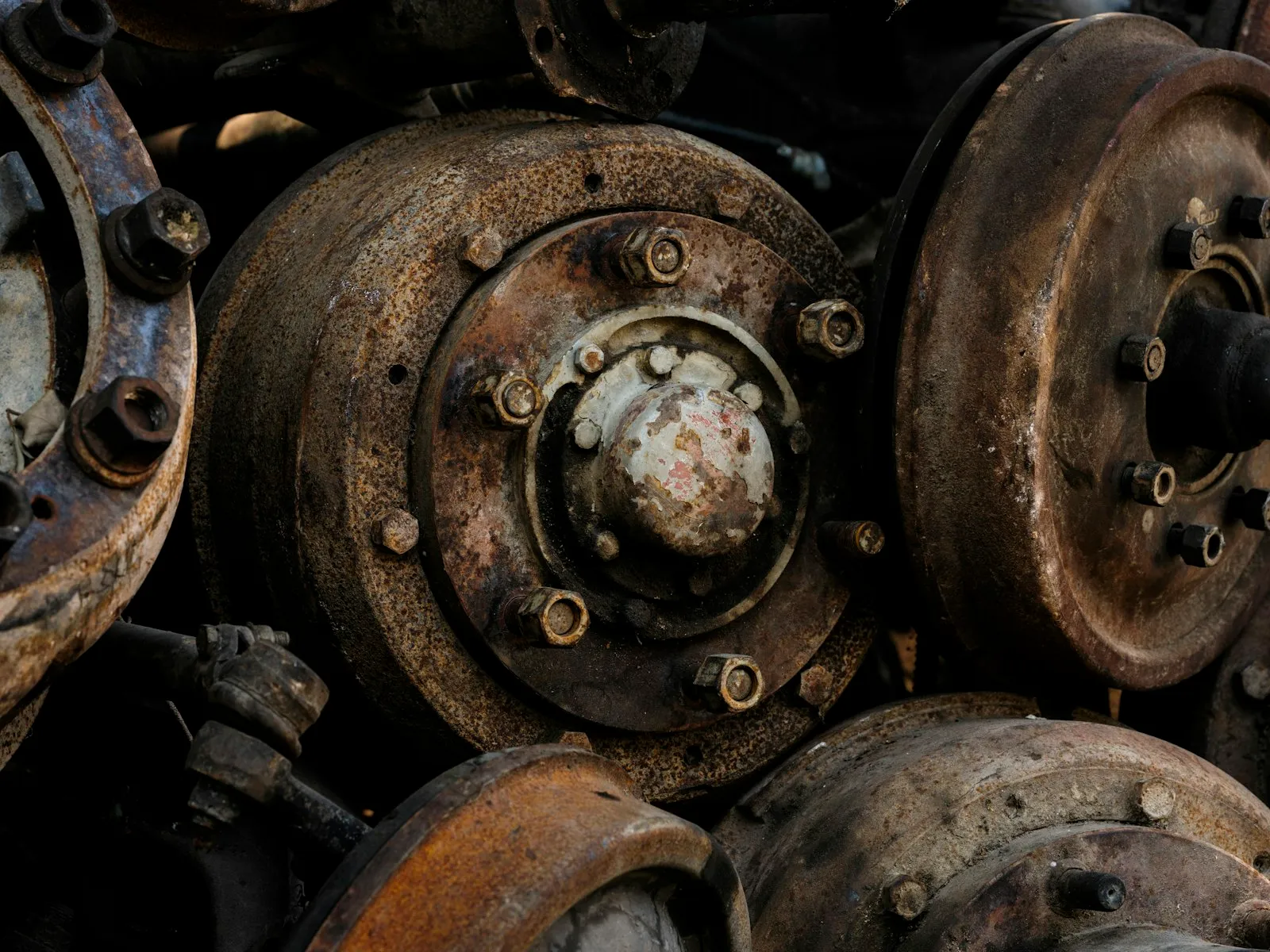
A used part from a salvage yard is usually a factory (OEM) part that came off a car just like yours. Most of the time it fits better than a cheap aftermarket copy, and it costs less than a new one. You need to know which kind of yard to use, how to make sure the part matches, and which parts are better bought new.
Full-service vs self-service (U-pull) yards
Yards that sell used parts work in one of two ways.
| Full-service yard | Self-service (U-pull) yard | |
|---|---|---|
| Who removes the part | Yard staff, before you arrive or while you wait | You, with your own tools |
| Pricing | Quoted per part, often based on the specific vehicle | Usually a posted price list by part type |
| Inventory check | Usually searchable by part; staff can check by phone | Usually a list of vehicles on the lot, not individual parts |
| Testing | Engines and transmissions are often checked before sale | You inspect it yourself |
| Warranty | Often available on major parts | Varies; sometimes a paid add-on |
| Best for | Engines, transmissions, heavy or hard-to-remove parts, people short on time or tools | Simple bolt-on parts, DIY repairs, tight budgets |
Full-service yards (also called auto recyclers or dismantlers) remove parts from vehicles, label them, and shelve them in a warehouse. You call or walk in, they confirm the part, and you pick it up or have it shipped. You pay more because the yard does the labor and stands behind the part.
Self-service yards (often called U-pull, pick-and-pull or pull-a-part yards) set vehicles out on stands in rows. You pay to enter, find a matching car, take the part off yourself and pay at the exit. Prices are lower, but the work, the risk of a bad part and the clean-up are yours.
Neither is always better. A starter on an easy-to-reach engine is a good U-pull job. A transmission is usually worth buying from a full-service yard that has tested it and offers a warranty.
You can search our junkyard directory by state to find both kinds near you. Listings show what each business does, so you can call the right type first.
Find the right part before you go
Most wasted trips come from a part that looks right but isn’t. Cars of the same make, model and year can have different engines, transmissions, wiring, brakes and trim. Match the part in this order.
1. Start with your VIN
The 17-character vehicle identification number (VIN) is the most reliable way to identify your exact car. NHTSA’s VIN decoder lets you query a VIN to identify specific information encoded in it, including the plant and country where the vehicle was built.1 You can also use our VIN decoder to pull up the year, make, model, engine and other build details.
Write down:
- Year, make, model and trim
- Engine size and engine code
- Transmission type (automatic or manual, and number of speeds)
- Drivetrain (front-wheel, rear-wheel, all-wheel or four-wheel drive)
- Build date (on the sticker in the driver’s door jamb)
The build date matters because automakers sometimes change parts partway through a model year.
2. Get the part number off your old part
Most parts carry a manufacturer part number: stamped into metal, printed on a label, or cast into plastic. Take a clear photo of it before you go. If the number on the donor part matches yours, it’s the same part. If it’s different, it may still fit, but check before you buy.
For electronic modules (engine computers, body control modules, radios), part numbers matter even more. A module with the wrong number may not work, or may need programming to your car by a dealer or a shop with the right equipment.
3. Ask about interchange
Many parts were used across several models and years, sometimes across brands that share platforms. Recyclers use parts interchange systems that list which vehicles share the same part. When you call a full-service yard, ask: “What does this part interchange with?” That widens your search beyond your exact model.
Interchange information is a starting point, not a guarantee. Confirm connectors, mounting points and part numbers in person.
4. Compare side by side
When you can, bring the old part with you, or at least photos from several angles. Lay the two parts next to each other and check:
- Mounting holes and brackets line up
- Electrical connectors have the same shape and number of pins
- Hose and line fittings are the same size and in the same place
- Pulleys, splines and gear teeth match
How to call a yard and check inventory
A short, clear call saves a wasted drive. Have this ready before you dial:
- Your VIN and the year, make, model, engine and trim
- The part you need, including which side (driver or passenger) and front or rear
- The part number off your old part, if you have it
Then ask:
- Do you have the part, or a vehicle on the lot that has it?
- Has the part been removed already, or is it still on the car?
- What’s the price, and is there a core charge?
- What’s the warranty or return policy, and do I need to keep the receipt?
- Can you hold it for me, and for how long?
- For U-pull yards: when did the vehicle arrive on the lot, and which row is it in?
Self-service yards often say what vehicles they have rather than what parts are on them. Popular parts get pulled fast, so a car that arrived last week may already be missing what you need. Calling the morning you plan to go is worth it.
What to bring to a U-pull yard, and how to stay safe
Check the yard’s rules before you go. Many self-service yards ban jacks, torches, grinders or open flames, and some limit which power tools you can bring. Rules differ from yard to yard.
Tools
A basic kit for most jobs:
- Socket set (metric and SAE) with extensions and a breaker bar
- Combination wrenches
- Screwdrivers, including a stubby and a set of trim-panel tools
- Pliers, locking pliers and side cutters
- A pry bar
- Penetrating oil for rusted bolts
- Cordless impact driver or drill, if the yard allows them
- A wheelbarrow or cart if the yard doesn’t provide one, for heavy parts
- Rags, gloves and zip-top bags for bolts and small parts
Safety
Yards are working industrial sites. Cars are on stands, ground is uneven, and there is broken glass and sharp metal everywhere.
- Wear sturdy closed-toe boots, long pants, gloves and safety glasses.
- Never get under a car that isn’t on a yard stand, and never move or prop up a vehicle yourself.
- Watch for fluids. Even cars that have been drained can still drip oil, coolant or fuel. Don’t smoke.
- Leave air bags and seat-belt pretensioners alone. They contain explosive charges and can deploy if handled or probed. In 2026 guidance on dangerous non-original replacement inflators, NHTSA strongly advised technicians not to electronically probe or electrify air bag connecting terminals because they can detonate and cause serious injury or death.2
- Lift with care. Heads, transmissions and doors are heavier than they look. Bring a friend for big parts.
- Bring water and sun protection. Most yards are open lots with little shade.
How to inspect a used part before you pay
At a full-service yard, ask what testing was done and whether it’s in writing. At a U-pull yard, inspection is on you. Check:
- Mileage: Look at the donor car’s odometer if you can. Lower is better for engines, transmissions and other wear parts.
- Damage: Look for cracks, bent brackets, stripped threads, melted plastic and corroded connectors.
- Signs of flood or fire: Silt or mud in the cabin, a waterline, rust in odd places or a burned smell are reasons to choose a different car, especially for electronics.
- Rotating parts: Spin pulleys on alternators, power-steering pumps and A/C compressors by hand. They should turn smoothly, without grinding or wobble.
- Engines: Check the oil for a milky look (possible coolant contamination) and look for sludge under the oil filler cap.
- Transmissions: Smell the fluid; a burned smell is a bad sign.
- Glass and lights: Look for chips, cracks, haze and broken mounting tabs.
Keep the donor car’s VIN or the yard’s stock number with your receipt. You may need it for a warranty claim.
Warranties, returns and core charges
Warranties and returns
Policies vary widely. Full-service yards commonly offer a warranty on major parts, sometimes with the option to buy a longer one. Self-service yards may offer exchange credit, a short return window, or nothing at all. Electrical parts are often sold as-is or for exchange only.
Before you pay, ask:
- Is this part covered, and for how long?
- Is it a refund, store credit or exchange only?
- Does the warranty cover labor, or only the part? (Labor is rarely covered.)
- Does it require professional installation or proof of it?
Get the answers on the receipt. A warranty you can’t prove is hard to use.
Will a used part void my car’s warranty?
No, not on its own. The FTC says plainly: “Your warranty stays in effect if you use aftermarket or recycled parts.”3 The FTC defines a recycled part as one made for and installed in a new vehicle, then removed and made available for resale or reuse, which is exactly what a junkyard part is.3
There’s a limit. If a defective or badly installed part damages something the warranty covers, the manufacturer or dealer can deny coverage for that damage. But it must prove the aftermarket or recycled part caused the damage before it can deny coverage.3 Keep your receipts and repair records.
Core charges
A core charge is a refundable deposit added to the price of parts that can be rebuilt, such as alternators, starters, brake calipers, steering racks and some transmissions. You get the deposit back when you return your old part. The Automotive Recyclers Association notes that recycling rebuildable “core” parts to the parts-rebuilding industry saves additional energy and resources.4
To get your core refund:
- Keep the old part in one piece, and drain fluids if the yard asks you to.
- Return it in the box or with the tag the yard gave you.
- Ask how many days you have to return it.
OEM vs aftermarket vs used: which to choose
| Type | What it is | Pros | Cons |
|---|---|---|---|
| New OEM | New part from the car’s manufacturer, usually through a dealer | Exact fit, new-part warranty | Highest price |
| Aftermarket | New part made by another company | Often cheaper than OEM, widely available | Fit and quality vary by brand |
| Used (recycled) OEM | Factory part removed from another vehicle | Factory fit and design at a lower price | Unknown history; wear varies; warranty varies |
| Remanufactured | Used core rebuilt to a standard, often with new wear parts | Usually comes with a warranty | Costs more than a used part |
A used OEM part is often the best value for parts that don’t wear much and are expensive new: body panels, doors, mirrors, trim, interior parts, wheels and many electrical modules.
Parts commonly bought used, and parts best bought new
Usually good to buy used
- Body parts: doors, hoods, fenders, trunk lids, bumpers, mirrors, and especially parts that are already the right color
- Interior parts: seats, consoles, door panels, dash trim, switches and knobs
- Glass and lighting: headlight and taillight assemblies, side windows
- Wheels: factory alloy wheels, after checking for bends and cracks
- Engines and transmissions: worthwhile when the mileage is known and the yard offers a warranty
- Electrical parts: alternators, starters, window motors and modules, if the part numbers match
- A/C compressors, radiators and condensers: after careful inspection for leaks and damage
Best bought new
- Air bags and seat-belt pretensioners. These are safety devices with explosive charges. NHTSA has warned that counterfeit replacement air bags can look nearly identical to genuine parts, and its testing showed malfunctions ranging from non-deployment to the expulsion of metal shrapnel during deployment.5 NHTSA’s advice at the time was to have air bags replaced by dealers or repair professionals who use original equipment parts.5 A used air bag also carries the risk of recall problems: tens of millions of vehicles with Takata air bags are under recall because the air bags can explode when deployed, and those explosions have caused injuries and deaths.6
- Brake pads, rotors, hoses and other friction or wear parts. These are inexpensive new and wear out with use.
- Timing belts, water pumps, filters, spark plugs, belts and hoses. Cheap new, and a used one could already be near the end of its life.
- Tires. Age and hidden damage are hard to judge.
- Steering and suspension wear parts such as ball joints and tie-rod ends.
Check for recalls
Before you put a used part on your car, and especially if you buy a car from a salvage auction or yard, check the VIN for open recalls. NHTSA tells owners to check for recalls using the VIN and to call a local dealer to get the fix, which is repaired for free.6 A recall repair is a reason to go to a dealer for that part rather than a junkyard.
Buying from a reputable yard
Auto recyclers, junkyards and salvage yards (other than those handling fewer than five salvage, junk or total-loss vehicles a year) must report the vehicles they take in to the National Motor Vehicle Title Information System (NMVTIS), including the VIN, the date obtained and whether the vehicle was crushed, disposed of or offered for sale.7 Reports are due at least monthly.7 A yard that tracks its vehicles this way can usually tell you where a part came from. Be wary of anyone selling major parts with no business location, no receipt and no stock number.
Selling instead of buying
If you’re on the other side, with a dead car that still has good parts, compare selling it for parts with selling it whole. Our guides on selling a car for parts or whole and how junkyards price cars explain the trade-offs. When the car is finally done, see how car recycling works for what happens to it next.
References
-
National Highway Traffic Safety Administration, “VIN Decoder” (vPIC), https://vpic.nhtsa.dot.gov/decoder/ ↩
-
National Highway Traffic Safety Administration, “Recommended Technician Guidance for Managing DTN Equipped Air Bags” (April 2026), https://www.nhtsa.gov/sites/nhtsa.gov/files/2026-04/recommended-technician-guidance-managing-dtn-equipped-air-bags.pdf ↩
-
Federal Trade Commission, “Auto Warranties and Auto Service Contracts”, https://consumer.ftc.gov/articles/auto-warranties-and-auto-service-contracts ↩ ↩2 ↩3
-
Automotive Recyclers Association, “Industry statistics” (undated; accessed October 2026), https://www.a-r-a.org/industry-statistics/ ↩
-
U.S. Immigration and Customs Enforcement, “NHTSA, ICE alert consumers to dangers of counterfeit air bags” (October 10, 2012), https://www.ice.gov/news/releases/nhtsa-ice-alert-consumers-dangers-counterfeit-air-bags ↩ ↩2
-
National Highway Traffic Safety Administration, “Takata Recall Spotlight”, https://www.nhtsa.gov/vehicle-safety/takata-recall-spotlight ↩ ↩2
-
Bureau of Justice Assistance, NMVTIS, “NMVTIS Reporting Entities: For Auto Recyclers, Salvage Yards, and Junk Yards”, https://vehiclehistory.bja.ojp.gov/node/36 ↩ ↩2
Questions people ask
- Is it cheaper to pull parts yourself at a U-pull junkyard?
- Usually, because you supply the labor and tools. Self-service yards typically post a fixed price list by part type, while full-service yards price each part individually. Compare the two for the part you need, and count your time and any entry fee.
- How do I know a junkyard part will fit my car?
- Match by VIN and the part number stamped or printed on your old part, not just by make, model and year. Ask the yard whether the part interchanges with your car, and check trim, engine and drivetrain codes.
- Will using a used part void my car's warranty?
- No. The FTC says your warranty stays in effect if you use aftermarket or recycled parts. The manufacturer can deny coverage only for damage it proves the part caused.
- Should I buy a used air bag from a junkyard?
- It's best not to. NHTSA has warned about counterfeit replacement air bags and tens of millions of vehicles have recalled Takata air bags. Have air bags replaced with genuine parts through a dealer, and check any car for open recalls by VIN.
- What is a core charge?
- A refundable deposit added to parts like alternators, starters and calipers. You get it back when you return your old part, which goes to a rebuilder. Ask how long you have to return it and in what condition.
- Can I call a junkyard to check if they have a part?
- Yes. Full-service yards can usually check their inventory by part, and many self-service yards list which vehicles are on the lot. Give your VIN and the part number, and ask them to hold the part if they have it.