
Should you sell your car for parts or whole?
Quick answer
Selling the car whole is faster and simpler: one buyer, one title transfer, and the car is gone. Parting it out can bring in more in total, but only if you have the tools, space and time to remove and sell parts, and you still have to get rid of the leftover shell with the title, so most owners of a single junk car come out ahead selling it whole.
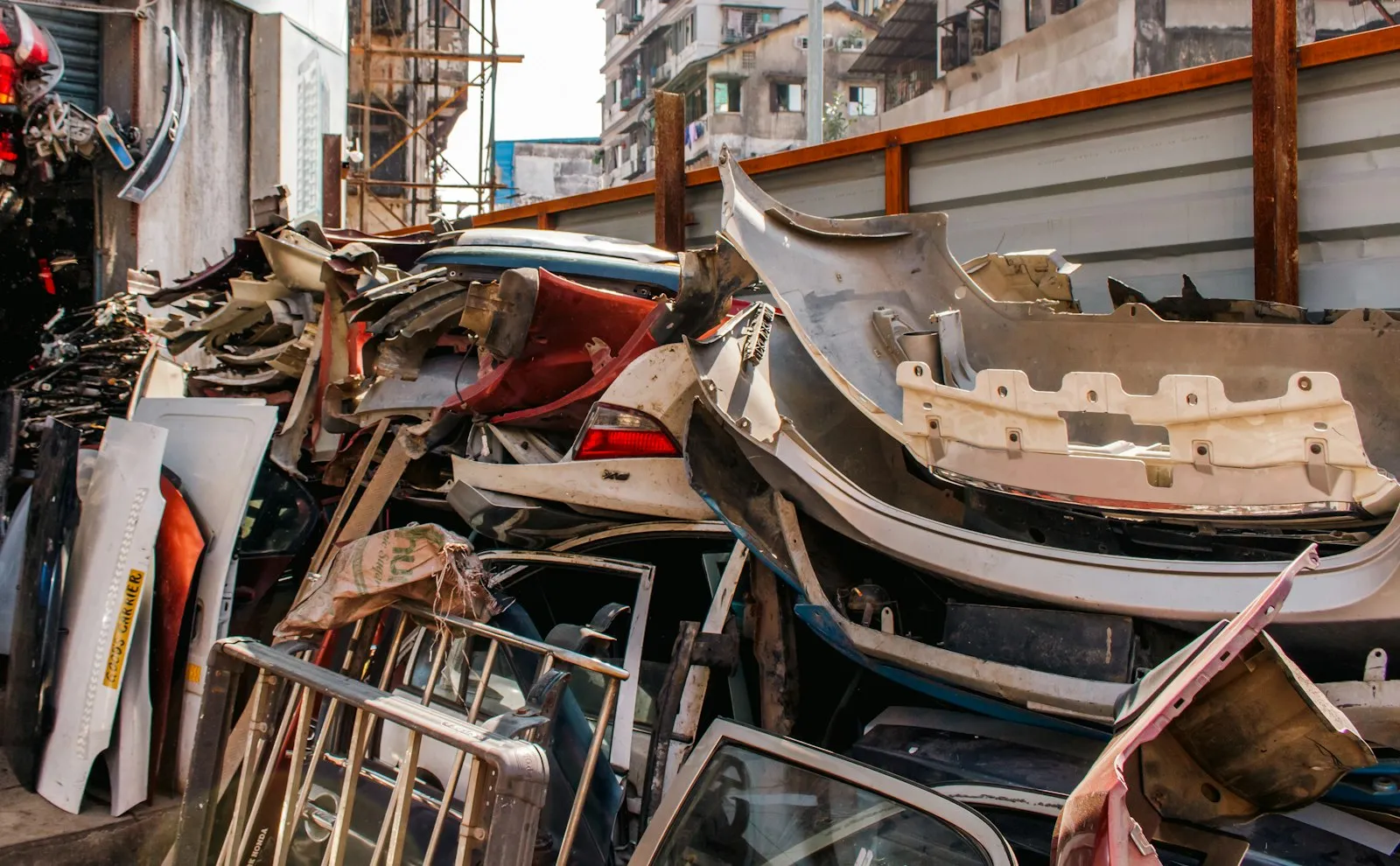
For most people with one junk car, selling it whole is the better choice. You make one sale, sign one title and the car leaves in one trip. Parting it out can earn more in total, but only if you can remove parts safely, store the car while you sell them, and still dispose of the shell legally at the end.
How the two options compare
| Sell whole | Part it out | |
|---|---|---|
| Time | Usually one sale and one pickup | Weeks or months of listing, answering buyers and shipping |
| Tools and space | None | Jacks, stands, hand tools, a place to keep a stripped car |
| Paperwork | One title transfer | Title still needed to sell the shell. Some parts need proof of ownership |
| Money | One price, paid at pickup | Possibly more in total, paid in pieces, with no guarantee every part sells |
| Risk | Low | Injury, unsold parts, fluid spills, complaints about a stored car |
Why yards pay for whole cars
Professional recyclers are built to do what parting out does, at scale. The Automotive Recyclers Association describes the industry’s model as reclaiming auto parts for reuse first, then recycling the steel and aluminum that’s left.1 It says about 86 percent of a vehicle’s material content is recycled, reused or used for energy recovery.1
So a whole car is worth more to a yard than a stripped one. When you pull the engine, transmission or catalytic converter, you’re taking away the parts that make up much of the yard’s offer. See how junkyards price cars.
When parting out makes sense
Parting out tends to work when most of these are true:
- The car has parts that are in demand, often because the model is common or popular with enthusiasts, and the parts work.
- You have mechanical skills and tools to remove parts without damaging them or hurting yourself.
- You have space to keep the car off the street for weeks, where local rules allow it.
- You’re patient and willing to list parts, answer messages, and pack and ship.
- You have a plan for the shell, including the title, because a yard will want it.
If you only check one or two of these, sell the car whole.
A middle path: pull a few things, sell the rest
Some owners keep one or two items with real resale value that come off easily, such as aftermarket wheels or a stereo they installed, then sell the car whole. Do this before you get quotes, and tell each buyer exactly what’s missing. A buyer who quoted for a complete car may lower the price at pickup if it isn’t complete.
Leave the factory parts the buyer is paying for in place. See junk car scams for why a clear description protects you at pickup.
Rules that apply when you sell parts
Catalytic converters need proof of ownership in many states
Because of converter theft, some states, including Texas and California, limit who can buy a used converter and what the seller must show.
- Texas: a person selling a catalytic converter to a metal recycler must provide the year, make, model and VIN of the vehicle it came from, plus a copy of the title or other proof of ownership. The recycler may not buy it otherwise.2
- California: a used catalytic converter can be bought only from certain licensed businesses or from an individual with documentation, such as a title or registration, showing they own the vehicle it came from. The VIN on that document must match the VIN permanently marked on the converter.3
See catalytic converters and junk cars before you remove one.
The shell still needs a title
Junk and salvage yards must report every vehicle they receive to the National Motor Vehicle Title Information System (NMVTIS), including the VIN, the date they got it and who they got it from.4 Expect a yard to ask for the title even if the car is only a shell. If you can’t find it, see how to get a duplicate title or selling a car without a title. State rules vary, so check your state’s junk car laws.
Close out your ownership
When the shell is sold, sign the title over and file your state’s release of liability or transfer notice. In California, you notify the DMV within 5 calendar days of the sale.5 In Texas, the seller files a vehicle transfer notification within 30 days of the sale.6 See release of liability and canceling insurance and registration.
Quick decision checklist
- Get a quote for the car whole, as-is. That’s your baseline.
- Look up what your three or four most valuable parts sell for, and be honest about which ones you can remove.
- Subtract the value those parts add to the whole-car quote, plus your time, fees and shipping.
- If what’s left isn’t clearly worth it, get an offer for your car and sell it whole.
For buying rather than selling parts, see the used auto parts guide.
References
-
Automotive Recyclers Association, “Industry statistics”, https://www.a-r-a.org/industry-statistics/ ↩ ↩2
-
Texas Occupations Code § 1956.0321, “Additional requirements regarding purchase of catalytic converter”, https://statutes.capitol.texas.gov/Docs/OC/htm/OC.1956.htm ↩
-
California Vehicle Code § 10852.5 (added by SB 1087, Chapter 514, Statutes of 2022), https://leginfo.legislature.ca.gov/faces/codes_displaySection.xhtml?lawCode=VEH§ionNum=10852.5 ↩
-
U.S. Department of Justice, NMVTIS, “NMVTIS Reporting Entities: For Auto Recyclers, Salvage Yards, and Junk Yards”, https://vehiclehistory.bja.ojp.gov/nmvtis_auto ↩
-
California DMV, “Notice of Transfer and Release of Liability (NRL)”, https://www.dmv.ca.gov/portal/vehicle-registration/titles/title-transfers-and-changes/notice-of-transfer-and-release-of-liability-nrl/ ↩
-
Texas Department of Motor Vehicles, “Buying or Selling a Vehicle”, https://www.txdmv.gov/motorists/buying-or-selling-a-vehicle ↩
Questions people ask
- Do I need the title if I sell parts from my car?
- Buyers of most individual parts won't ask for it, but you'll need it to sell the leftover shell to a yard, and some states require proof of ownership for certain parts. Texas and California, for example, require title or registration documents to sell a used catalytic converter.
- Will a junkyard pay less if parts are missing?
- Usually yes. Yards value a car partly for its resellable parts, so removing the engine, transmission, catalytic converter or other valuable parts lowers what they'll pay for what's left. Tell the buyer exactly what's missing when you ask for a quote.
- Which parts are worth pulling?
- Parts that are in demand and easy to remove and ship tend to be easiest to sell. Check what your exact year, make and model's parts sell for before you start, because demand varies a lot by model.
- Can I leave a stripped car sitting in my driveway?
- That depends on your city, county and any homeowners' association, and the rules differ from place to place. Check them before you start a long part-out.