
How much is my junk car worth?
Quick answer
A junk car is worth what a buyer can recover from it: the car's metal at current scrap prices, plus any parts that can still be sold, such as the catalytic converter, engine, transmission or wheels, minus the buyer's towing and processing costs. At the 2025 USGS benchmark of about $319 per metric ton for No. 1 heavy melting steel, the steel in a 3,000-pound car is worth roughly $435 delivered to a mill, and a yard's offer to you is lower than that unless valuable parts add to it. Get several written offers, because buyers price the same car differently.
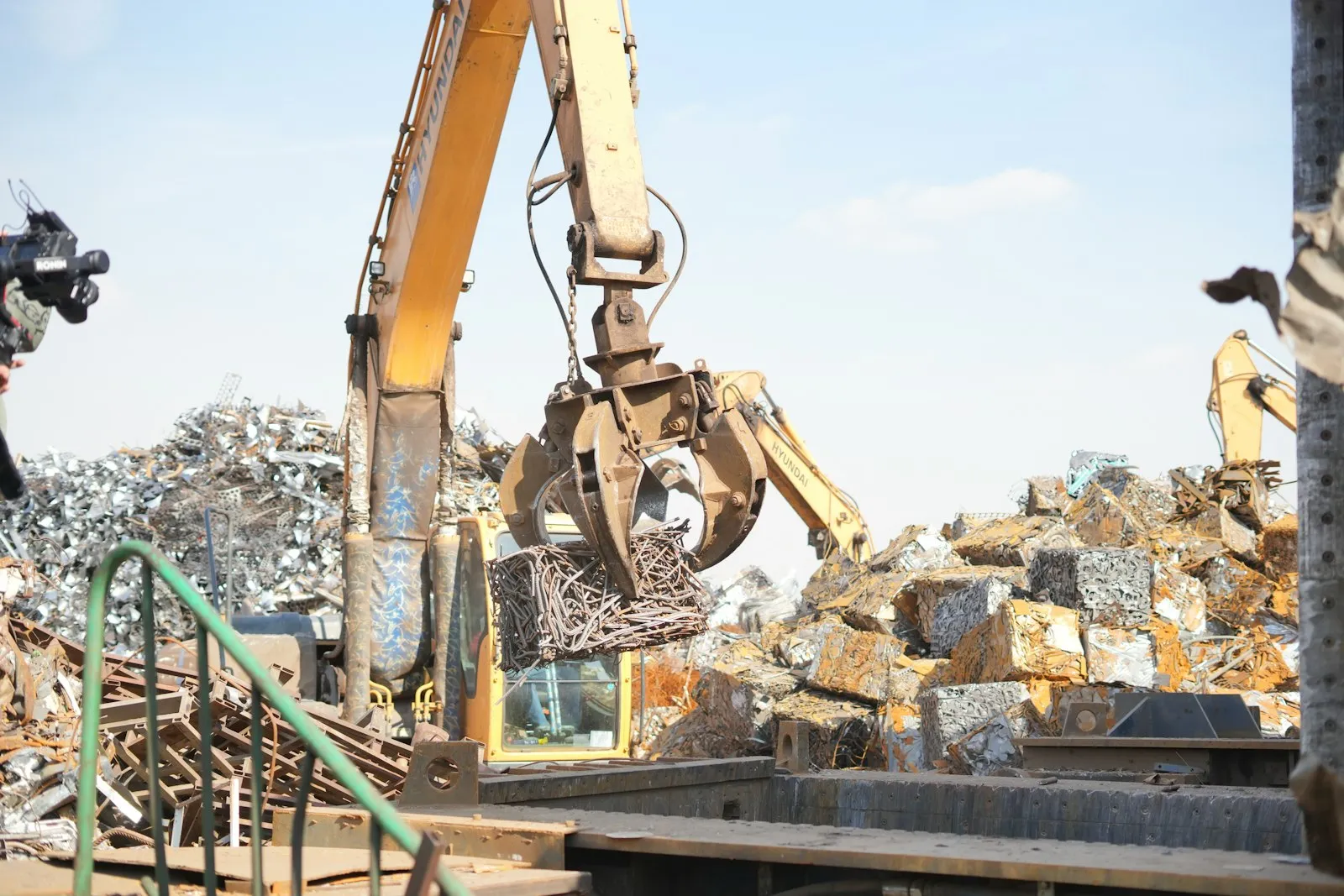
Most junk cars sell for their scrap metal plus whatever usable parts they still have. The buyer works out what it can recover, subtracts its costs (towing, draining fluids, dismantling, shredding, freight) and leaves room for profit. Your offer is what’s left. The sections below explain each part of that sum, how to estimate it yourself, and how to avoid leaving money behind.
The short version: what moves the price
| Factor | Effect on the offer |
|---|---|
| Vehicle weight | Sets the scrap-metal floor. Heavier cars carry more steel. |
| Current scrap steel price | Moves every offer up or down together. It changes month to month. |
| Catalytic converter | Contains platinum-group metals, so it can be one of the more valuable single parts. |
| Engine, transmission and body parts | Worth more when the model is common and parts are in demand. |
| Runs and drives | Opens resale and tested-part value, and makes loading easier. |
| Aluminum wheels, battery, other easy parts | Small additions, and quotes usually assume they’re on the car. |
| Distance and access | Longer tows and hard-to-reach cars cost the buyer more. |
| Title status | A clean, signed title lets more buyers bid. Missing or branded titles narrow the field. |
Weight times the scrap steel price: the floor
When nothing on a car can be resold, its value comes down to metal. Cars are the biggest single source of old steel scrap in the United States. According to the U.S. Geological Survey, recycling cars recovers more than 13 million tons of steel a year, equal to about 17 million cars, through more than 280 car shredders in North America.1 That works out to roughly three-quarters of a metric ton of recovered steel per car on average, but individual cars vary a lot.
What the public scrap price data shows
The USGS publishes a yearly average for one benchmark grade, No. 1 heavy melting steel, delivered to the mill:1
| Year | Average delivered price, No. 1 heavy melting steel (US $ per metric ton) |
|---|---|
| 2021 | 417.66 |
| 2022 | 381.72 |
| 2023 | 333.28 |
| 2024 | 314.85 |
| 2025 (estimated) | 319 |
Source: USGS Mineral Commodity Summaries 2026, iron and steel scrap (price data from Fastmarkets AMM).1
Within a single year the price moves too. In the first 11 months of 2025, the monthly composite ranged from a high of $366.26 per ton in March to a low of $303.46 in November.1 The same car can be worth noticeably more or less depending on when you sell it.
Why a yard pays less than this number
This is the price steel mills pay for clean, prepared scrap delivered to their door. Your car is a long way from that:
- It isn’t all steel. Glass, plastic, rubber, fabric and fluids have to come out or be separated, and they add weight that isn’t paid as steel.
- It has to be processed. The yard drains fluids, removes the battery and other parts, and sends the hull to a shredder.
- It has to be moved twice: from your driveway to the yard, then from the yard to a shredder or mill.
So treat the USGS figure as a market indicator, not a price per ton for your car. What it tells you is the direction. When the benchmark falls, junk car offers usually fall with it, and when it rises they usually rise.
Finding your car’s weight
Use the curb weight: the weight of the car with standard equipment and full fuel, oil and coolant.2 You’ll find it in the owner’s manual or the manufacturer’s specifications for your exact year, model and trim.
Don’t use the sticker on the driver’s door jamb for this. Federal rules require that label, on the hinge pillar, door-latch post or door edge, to show the gross vehicle weight rating (GVWR),3 which is the manufacturer’s figure for the vehicle’s loaded weight.2 GVWR includes passengers and cargo, so it’s always more than the car actually weighs.
A rough way to estimate the metal floor
- Find the curb weight in pounds.
- Divide by 2,204.6 to convert to metric tons.
- Multiply by the latest USGS benchmark price.
At the 2025 estimated average of $319 per metric ton,1 the benchmark works out to about $145 per 1,000 pounds of delivered heavy melting steel. A whole car is worth less than its weight in that grade, for the reasons above, so the result is a ceiling for the metal alone, not an offer. It helps you spot a quote that’s far out of line, and it shows how much of an offer is coming from parts rather than metal.
| Curb weight | Typical vehicle | Metal-value ceiling at $319 per metric ton (2025 estimate) |
|---|---|---|
| 2,500 lb | Small car | about $360 |
| 3,000 lb | Midsize sedan | about $435 |
| 3,500 lb | Small SUV or minivan | about $505 |
| 4,500 lb | Full-size SUV or pickup | about $650 |
The table is the benchmark price multiplied by weight. It is not what a yard pays, and prices move every month, so check the current USGS or a dated scrap price index before you compare offers.
Parts that still have value
Two cars of the same weight can get very different offers because of what’s still on them. Yards that resell parts value a car by what they can pull and sell. See how junkyards price cars for more.
Catalytic converter
The leading US use for platinum-group metals is catalytic converters, which cut harmful emissions from cars.4 They’re also a major source of recycled metal. In 2025 about 50,000 kilograms of palladium and 8,600 kilograms of platinum were recovered from automobile catalytic converters in the United States.4
The value of those metals swings widely, which is why converter prices do too. USGS annual average prices per troy ounce:4
| Metal | 2021 | 2025 (estimated) |
|---|---|---|
| Palladium | $2,419.18 | $1,100 |
| Platinum | $1,094.31 | $1,200 |
| Rhodium | $20,254.10 | $5,800 |
How much metal a converter holds depends on the vehicle, engine and emissions system, so two converters can be worth very different amounts. What it means for you: tell buyers whether the original converter is on the car, and expect a lower offer if it’s missing. Our catalytic converter guide explains the rules around removing and selling one.
Engine and transmission
A working engine or transmission from a common model can be resold as a used part. Demand depends on how many of those cars are still on the road and how often that part fails on them. A car with a blown engine or a bad transmission loses that value but keeps its metal and other parts.
Body panels, interior and electronics
Doors, lights, mirrors, seats, modules and glass in good condition can sell to people repairing the same model. Newer and more popular models usually have more demand for parts. A rare car with little parts demand may be valued close to its metal.
Wheels and battery
Aluminum wheels and the battery add smaller amounts. Quotes usually assume they’re on the car, so removing them can cost you more than you gain.
Condition: does it run, and what’s wrong with it
- Runs and drives: may be worth more than scrap, as a cheap car, an auction car or a source of tested parts. Check whether repairing makes more sense.
- Doesn’t run: valued mostly on parts and metal. See selling a car that doesn’t run.
- Flood or fire damage: flood damage can ruin electronics and interiors, and fire can ruin most resellable parts, leaving mostly metal. See flood-damaged cars and fire-damaged cars.
- Totaled by insurance: a total loss isn’t automatically worthless. The federal title database notes that an insurance determination of “total loss” “does not necessarily mean that a vehicle was destroyed or is worthless.”5 See selling a totaled car.
Location and towing distance
Most junk cars are towed, and the tow is a real cost to the buyer. Whether it’s included in the offer or deducted from it, a long tow, a remote location, a car with no wheels, or one stuck in a tight garage or backyard lowers the net price. Buyers close to you usually have the edge. Our junkyard directory shows yards near you, and junk car towing explains what to ask.
Scrap and parts markets are also regional. Shredder capacity, the number of competing yards and local demand for used parts all differ by area, so a quote from another state tells you little about your own market.
Title status
The title doesn’t change how much steel is in the car, but it changes who can buy it and what they can do with it:
- Clean title in your name: the widest choice of buyers, including those who resell running cars.
- Salvage or rebuilt title: fine for scrap and parts buyers, but a branded title lowers resale value. See salvage titles.
- Nonrepairable or junk brand: the car can be used only for parts or scrap. Texas, for example, defines a nonrepairable vehicle as one whose “only value is as a source of parts or scrap metal.”6
- No title or a lien: fewer buyers can legally take it, and some states only allow no-title sales for old, low-value cars. See selling a car without a title and selling a car with a lien.
How to estimate your car’s value
- Get the facts right. Year, make, model, trim and VIN (our VIN decoder helps), curb weight, mileage, whether it runs, and what’s missing or damaged.
- Work out the metal ceiling using the method above, so you know the floor isn’t zero and roughly where metal alone tops out.
- List the valuable parts still on the car: converter, engine, transmission, wheels, good body panels.
- Get at least three written offers describing the car the same way to each buyer. You can get an offer for your car here and compare it with local yards.
- Compare net amounts: the offer minus any towing or paperwork fees, paid the way you want.
How to get the most for it
- Describe the car honestly and completely. Accurate quotes don’t get cut at pickup.
- Keep it complete. Removing the converter, wheels or battery can lower the offer by more than those parts bring on their own.
- Have the title ready. A clean, signed-over title in your name gives you the most buyers. If it’s lost, a duplicate title is often worth the wait.
- Ask whether towing is included, and compare net amounts, not headline numbers.
- Get the price in writing, confirmed as guaranteed if the car matches your description.
- Think about timing. Scrap prices move month to month,1 but don’t hold out for a rebound if the car is costing you insurance, registration or storage.
- Consider parting it out yourself only if you have the time, space and tools. Compare the two options in selling for parts or whole.
- Avoid scams: big quotes that shrink at pickup, payment after the tow, or blank titles. See junk car scams.
When you’re ready, the step-by-step guide to junking a car covers paperwork and handover.
References
-
U.S. Geological Survey, Mineral Commodity Summaries 2026, “Iron and steel scrap” (February 2026), https://pubs.usgs.gov/periodicals/mcs2026/mcs2026-iron-steel-scrap.pdf ↩ ↩2 ↩3 ↩4 ↩5 ↩6
-
49 CFR § 571.3, “Definitions” (curb weight; gross vehicle weight rating), via Cornell Legal Information Institute, https://www.law.cornell.edu/cfr/text/49/571.3 ↩ ↩2
-
49 CFR § 567.4, “Requirements for manufacturers of motor vehicles” (certification label), via Cornell Legal Information Institute, https://www.law.cornell.edu/cfr/text/49/567.4 ↩
-
U.S. Geological Survey, Mineral Commodity Summaries 2026, “Platinum-group metals” (February 2026), https://pubs.usgs.gov/periodicals/mcs2026/mcs2026-platinum-group.pdf ↩ ↩2 ↩3
-
National Motor Vehicle Title Information System (U.S. Department of Justice), “Consumers”, https://vehiclehistory.bja.ojp.gov/nmvtis_consumers ↩
-
Texas Department of Motor Vehicles, “Salvage dealer license”, https://www.txdmv.gov/dealers/licensing/salvage-dealer ↩
Questions people ask
- How much do junkyards pay per ton for cars?
- There's no single national rate. The best public benchmark is the USGS average for No. 1 heavy melting steel delivered to mills, about $319 per metric ton in 2025 (estimated). Yards pay owners less than that, because a car isn't pure steel and the yard pays for towing, processing and shipping.
- Where do I find my car's weight?
- Use the curb weight from the owner's manual or the manufacturer's specifications for your exact year and trim. The sticker on the driver's door jamb shows the gross vehicle weight rating (GVWR), which is the maximum loaded weight, not what the car weighs.
- Is my car worth more if it still runs?
- Often, yes. A car that runs and drives may be resold or have its engine and transmission pulled as tested parts, and it's easier to load. Tell buyers honestly whether it starts and drives, because offers usually assume it does or it doesn't.
- Does a missing catalytic converter lower the price?
- Usually. Catalytic converters contain platinum-group metals, and they are the leading US use for those metals. A buyer that quoted a car with its converter will usually lower the price if the converter is gone.
- Can I sell a junk car without a title, and does it lower the price?
- In some states you can, under special rules for old, low-value cars. Fewer buyers can legally take a car without a title, so you may get fewer offers. See our guide to selling a car without a title.